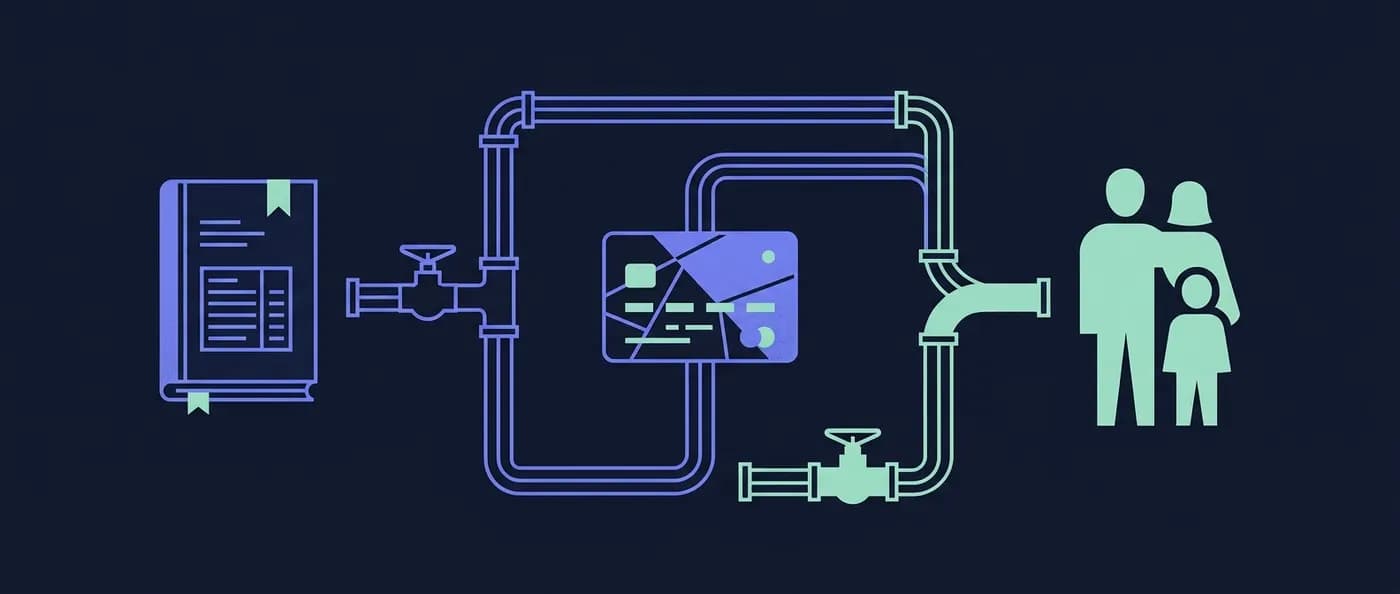
Rebalancing fails for behavioural reasons, not technical ones — it asks you to sell what is working and buy what is not. Automation is therefore an attractive answer, and there are three genuinely different ways to get it in India. Only one of them is what most people mean by "robo-advisor".
The three routes
1. Do it yourself, on a written rule. An annual date, a ±5 percentage point band, and an execution ladder that uses new money before it uses a sale. Free, fully controlled, tax-aware — and dependent on you actually doing it in the year it is hardest.
2. A platform's automated rebalancing. Several Indian platforms will monitor an allocation and prompt or execute switches. The important thing to establish is what the platform is registered as. A SEBI-registered Investment Adviser owes you a fiduciary duty and charges you a fee. A distributor earns commission from the funds it places. Both may offer "advice"; only one is paid by you. Ask, because the answer determines whose interest the recommendation serves.
3. A fund that rebalances internally. A balanced advantage, dynamic asset allocation or multi-asset fund shifts between equity and debt inside the scheme, on a published model. This is automation with a decisive structural advantage, covered below.
The tax point that decides it
This is the whole argument, and it is specific to India.
Rebalancing inside a fund is not a taxable event for you. When a balanced advantage fund moves from 65% equity to 40%, no gain is realised in your hands. You have one holding; nothing was sold from your account.
Rebalancing across your own funds is a redemption. Selling equity units to buy debt units realises capital gains — 20% short-term on equity under twelve months, 12.5% above the ₹1,25,000 annual exemption thereafter, slab rate for most debt funds. See mutual fund taxation.
So a robo-advisor that rebalances your portfolio quarterly is generating a tax bill four times a year to maintain a discipline that annual bands would maintain nearly as well. The frequency of automated rebalancing is a cost, not a feature, and it is the question to ask any platform offering it.
An internally rebalancing fund sidesteps this entirely. The trade-off is that the model is the AMC's rather than yours, and you cannot see or override the current equity level in the way you can with your own allocation.
What automation is genuinely good at
- Not forgetting. The most common rebalancing failure is simply not doing it.
- Removing the moment of decision. The hard part is acting in March 2020, not knowing that you should.
- Tracking drift accurately across many holdings, which is tedious by hand.
- Directing new money to the underweight asset — the cheapest form of rebalancing there is, and one automation does well.
What it is not good at
- Knowing your full picture. Your EPF, PPF, property, gold and your spouse's portfolio are part of your allocation, and no platform sees all of it. Rebalancing "your portfolio" while ignoring 60% of your net worth is precision applied to the wrong number.
- Tax-aware sequencing. Few tools model your remaining annual exemption, your holding periods and your FIFO lot positions when choosing what to sell.
- Handling life events. A job change, a house purchase or a new dependant changes the target allocation itself, and no algorithm initiates that conversation.
- Behavioural coaching. The highest-value thing a human adviser does is stop you selling in a panic. An app that lets you liquidate with two taps does the opposite.
Choosing, honestly
Do it yourself if you have four to six funds, a simple allocation, and the discipline to check once a year. The whole task is twenty minutes annually, and executing with new money first makes it nearly free. For most readers this is the right answer.
Use an internally rebalancing fund if you know you will not do it, or you want the tax efficiency. This is the strongest option for someone who has already demonstrated — honestly — that they do not act on their own rules.
Use a platform if the portfolio is genuinely complex, and only after establishing whether it is a registered Investment Adviser or a distributor, what it costs, how often it rebalances, and whether it accounts for holdings it does not administer.
Consider a fee-only human adviser if the amounts are large enough that a single behavioural error would cost more than the fee. That is the honest test, and above a certain corpus it is easily met.
Pitfalls to avoid
- Rebalancing quarterly because the tool makes it easy. Frequency is a tax cost; annual bands capture nearly all the benefit.
- Not knowing how the platform is paid. Adviser versus distributor is the first question, not the last.
- Automating a portfolio that excludes most of your net worth. EPF and property are part of the allocation.
- Assuming automation removes the need to review. The target allocation itself needs revisiting when your life changes.
- Paying for rebalancing on a simple portfolio. Four funds and one annual date do not need a subscription.
- Trusting a backtested model. The equity/debt models inside dynamic allocation funds are calibrated on history and disclosed for a reason. Read the mechanism.
Key takeaway
Rebalancing fails for behavioural reasons, so automating it is sensible — but in India the decisive variable is tax. Rebalancing inside a fund costs you nothing; rebalancing across your own funds realises capital gains every time, which makes a quarterly automated rebalance a recurring cost rather than a feature. For a simple portfolio, an annual date with a ±5 point band and new money deployed first beats any subscription. If you know you will not do it, an internally rebalancing fund is the tax-efficient way to delegate — and if you use a platform, establish first whether it is paid by you or by the funds it recommends.
More in Module 8 — The operational and legal layer
Demat or Statement of Account: which holding mode?
The units are identical; only the recordkeeping differs. One is free and keeps Direct plans simplest, the other puts everything into one transmission process.
Moving your funds from one platform to another
Your platform does not hold your units, so changing apps usually transfers nothing. What costs money is a Regular-to-Direct switch, which is a redemption.
Nominee vs joint holder: what happens in a crisis
A nominee receives, a joint holder owns, and a Will decides who keeps it — three different questions. Plus the case nobody plans for: alive but unable to act.
Unclaimed dividends and redemptions: how the money gets stuck
Stale addresses, closed bank accounts and forgotten folios. What it earns meanwhile, why three years is the number that matters, and how to search MITRA.
Tracing and claiming a deceased relative's mutual funds
Find, then claim, then decide. The three routes by what was recorded, why you transmit rather than redeem, and the cost basis that carries over intact.
Folio numbers: why you have several and when to consolidate
A folio is your account with one AMC, not one scheme. How duplicates appear silently, what they cost, and why merging them is free and not a taxable event.
Cut-off timings: which day's NAV you actually get
Realisation of funds decides the NAV, not when you clicked. 3pm for most schemes, 1:30pm for liquid funds — and why optimising your SIP date is wasted effort.
How SEBI's rules actually protect a retail investor
The structural protections, the conduct rules and the safety nets — and the more useful half: an explicit list of what none of it protects you from.
CAMS and KFintech: the registrars that hold your record
Not your AMC and certainly not your app — two registrars hold the official register. Why MF Central is the single most useful login in your portfolio.