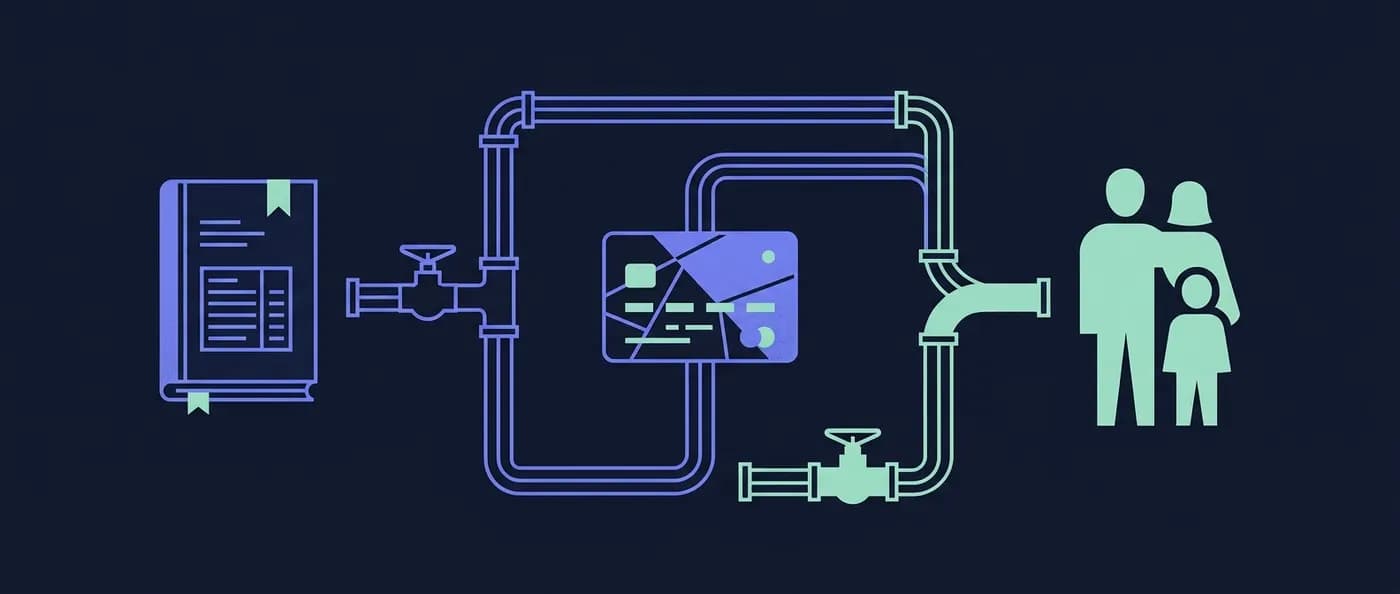
You want to leave your distributor, or move from a broker's app to Direct plans, or consolidate five apps into one. The first thing to understand is that in most cases nothing needs to be transferred at all — because the platform you bought through does not own your units.
Who actually holds your units
Your units are recorded by the fund's registrar — CAMS or KFintech — against a folio number, or by a depository if you hold in demat mode. The app you used to transact is a distribution channel sitting on top of that record. It is not the custodian of anything.
Which means you can stop using a platform and keep every unit you own. Your folio continues to exist, your SIPs continue unless you stop them, and you can transact directly with the AMC or through MF Central at any time.
This single fact removes most of the anxiety about switching, and it is exactly what platforms have no incentive to explain.
The four situations, from easiest to hardest
1. Changing the app you use, keeping Direct plans. Nothing to transfer. Register on the new platform with the same PAN and email; your existing folios appear because the platforms fetch holdings from the registrars. Set up new SIPs there if you want, and cancel the old ones from the old platform or directly with the registrar.
2. Moving Regular plan units to Direct. This is a switch, and switches are redemptions followed by purchases. That means:
- Capital gains are realised on the Regular units — 20% short-term on equity held up to twelve months, 12.5% above the ₹1,25,000 exemption thereafter, slab rate for most debt funds.
- Exit load may apply on units held less than the load period.
- Units are matched oldest first, which usually works in your favour.
The economics are in Direct vs Regular. The rule of thumb that survives contact: send all new money to Direct immediately, and move existing Regular units only when the tax cost of switching is small — typically the older units that already qualify for long-term treatment and sit within the annual exemption. Spreading the switch across two financial years uses two years' exemption.
3. Removing a distributor's ARN without redeeming. If you want to keep the Regular plan units but stop the distributor earning trail on them, you can request a change of broker code to "Direct" on the folio through the registrar. This is not a redemption and does not trigger tax; the units simply stop paying trail commission from that point. The plan itself does not change — a Regular plan unit remains a Regular plan unit — so the saving is smaller than a full switch to a Direct plan, but it costs nothing.
4. Moving units between demat and SoA. Dematerialisation and rematerialisation are recordkeeping changes, submitted through your depository participant or the registrar. They take time and paperwork. They are not redemptions, so they are not taxable events.
The one thing that genuinely cannot be transferred
Mutual fund units cannot be transferred from one person to another. Not to a spouse, not to a child, not as a gift. The only ways units change hands are transmission on death and — in demat mode — off-market transfer in a small set of permitted circumstances.
If you want to move money to a family member, you redeem, pay the tax, gift the proceeds, and they invest in their own name. There is no way around the tax event, and any scheme offered to you that claims otherwise is worth investigating carefully.
A clean switching procedure
- Download a full CAS first. Every folio, every AMC, in one document. This is your inventory and you will need it.
- Check your KYC is Validated, not merely Registered — a mismatch is the most common reason a new platform cannot onboard you. See KYC.
- Stop the old SIPs explicitly. Deregistering from an app does not necessarily cancel a bank mandate. Confirm with the registrar and check your bank statement the following month.
- Start new SIPs on the new platform before the old ones stop, so no month is missed.
- Do not redeem anything you do not have to. The units are portable; the tax is not.
- Compute the switch cost before switching Regular to Direct. The gain, the applicable rate, the exit load, and the exemption you have left this year.
- Verify after one full cycle. Pull a fresh CAS a month later and confirm the holdings, the SIPs and the bank mandates are what you intended.
Pitfalls to avoid
- Redeeming everything to "move platforms". Almost never necessary, and it converts a free change into a tax bill.
- Assuming deleting the app stops the SIP. The bank mandate is separate. Cancel explicitly and verify.
- Switching all Regular units to Direct in one go. The tax can exceed several years of the commission you were avoiding. Stage it.
- Forgetting the exit load window. Recently purchased units may carry one.
- Losing the folio history. Keep the CAS from before the move; it is the simplest record of acquisition dates and costs.
- Signing up through a platform that only offers Regular plans. Check before you move, not after.
- Trying to "transfer" units to a spouse. Not possible. Redeem, gift, and reinvest in their name.
Key takeaway
Your platform does not hold your units — the registrar or the depository does — so changing apps usually requires transferring nothing at all. The distinction that costs money is between a platform change (free) and a Regular-to-Direct switch (a redemption, with capital gains and possibly an exit load). Send new money to Direct immediately, move old units gradually and only when the tax is small, consider a free broker-code change to Direct if you are keeping the units, and remember that units can never be transferred to another person — only redeemed, gifted as cash, and reinvested.
Terms used here
More in Module 8 — The operational and legal layer
Demat or Statement of Account: which holding mode?
The units are identical; only the recordkeeping differs. One is free and keeps Direct plans simplest, the other puts everything into one transmission process.
Nominee vs joint holder: what happens in a crisis
A nominee receives, a joint holder owns, and a Will decides who keeps it — three different questions. Plus the case nobody plans for: alive but unable to act.
Unclaimed dividends and redemptions: how the money gets stuck
Stale addresses, closed bank accounts and forgotten folios. What it earns meanwhile, why three years is the number that matters, and how to search MITRA.
Tracing and claiming a deceased relative's mutual funds
Find, then claim, then decide. The three routes by what was recorded, why you transmit rather than redeem, and the cost basis that carries over intact.
Folio numbers: why you have several and when to consolidate
A folio is your account with one AMC, not one scheme. How duplicates appear silently, what they cost, and why merging them is free and not a taxable event.
Cut-off timings: which day's NAV you actually get
Realisation of funds decides the NAV, not when you clicked. 3pm for most schemes, 1:30pm for liquid funds — and why optimising your SIP date is wasted effort.
How SEBI's rules actually protect a retail investor
The structural protections, the conduct rules and the safety nets — and the more useful half: an explicit list of what none of it protects you from.
CAMS and KFintech: the registrars that hold your record
Not your AMC and certainly not your app — two registrars hold the official register. Why MF Central is the single most useful login in your portfolio.
Automated rebalancing: robo-advisor or do it yourself?
In India the deciding variable is tax: rebalancing inside a fund costs nothing, rebalancing across your own funds realises gains every time.