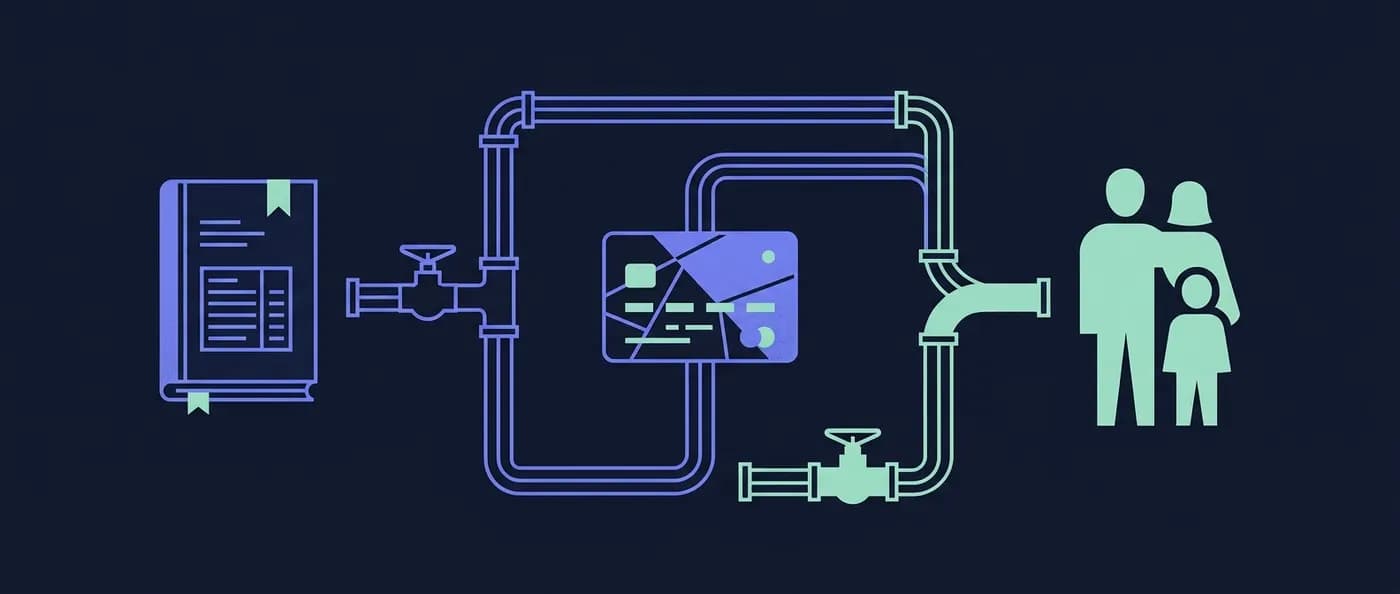
You pressed "invest" at 2:45pm and got the next day's NAV. Nothing went wrong. The rule that decides which day's NAV you receive is not about when you clicked — it is about when the fund actually had your money, and understanding that distinction saves a lot of confusion.
The rule that matters most
For purchases, the applicable NAV depends on realisation of funds, not on submission of the application.
Both conditions must be met before the cut-off:
- The application is received, and
- The money is actually credited to the scheme's bank account.
If your ₹50,000 reaches the AMC at 4:10pm, you get the next business day's NAV even if the order was placed at 11am. UPI and net-banking transfers usually realise quickly; NEFT and RTGS depend on banking hours; a cheque depends on clearing.
This rule applies regardless of the amount. An earlier regime allowed same-day NAV on smaller purchases without realisation; that carve-out is gone, and every purchase — including each SIP instalment — is now on the realisation basis.
The cut-off times
Liquid and overnight funds — purchase: 1:30pm. Redemption: 3:00pm. This is the one that catches people, because it is 90 minutes earlier than everything else and these are exactly the funds used for short-term money where the timing matters.
Liquid funds also carry a distinctive quirk: buy before the cut-off with realised funds and you generally receive the previous day's NAV, because these funds accrue daily and units are allotted from the point the money is available.
All other schemes — 3:00pm, for both purchase and redemption.
Non-business days. Applications on a weekend or market holiday take the next business day's NAV. There is no NAV on a non-business day because the underlying securities did not trade.
What this means for your SIP
Your SIP date is not the allotment date. The bank debit, the transfer to the AMC, and the allotment are three separate events. A SIP dated the 5th typically allots on the 5th if the debit clears in time, and on the 6th or 7th if it does not. Over twenty years this makes no measurable difference to your outcome — which is worth internalising, because a great deal of energy gets spent choosing the "best" SIP date.
The evidence on SIP dates is clear and unglamorous: it does not matter. Across long periods, the difference between the 1st, the 10th and the 25th is noise. Pick a date two or three days after your salary credits, so the mandate never fails for want of balance — that is the only consideration with any real value.
A failed mandate is a real cost, though. A bounced SIP may attract a bank charge and, more importantly, breaks the automation that the whole strategy depends on. See first SIP mistakes.
Redemption: when the money actually arrives
Submit before the cut-off and you get that day's NAV. The payout is separate and follows a settlement cycle:
- Equity funds — typically credited within a couple of business days of the redemption date.
- Debt funds — generally faster.
- Liquid and overnight funds — usually next business day, with instant redemption up to ₹50,000 or 90% of folio value per day at most AMCs, credited within minutes.
Two things to plan around: weekends and market holidays extend everything, and your bank mandate must be current — a redemption to a closed account bounces and the money sits with the AMC until you claim it, which is one route to unclaimed money.
Where timing genuinely matters
For most decisions, none of this changes anything. Three exceptions:
1. Large lump sums near a cut-off. On ₹50 lakh, one day's NAV movement is a real number. Transfer the money a day early and place the order in the morning.
2. Liquid funds for a specific date. If money must be available on a Thursday, the 1:30pm cut-off, the T+1 settlement and any intervening holiday all matter. Work backwards from the date you need the funds.
3. The end of a financial year. A redemption whose NAV falls on 31 March versus 1 April lands the capital gain in a different assessment year, which can change which year's ₹1,25,000 exemption it uses. Worth a moment's thought on a large sale.
Pitfalls to avoid
- Assuming the click time decides the NAV. Realisation of funds does.
- Missing the 1:30pm liquid fund cut-off. The most common timing error, and it is on the funds where dates matter most.
- Optimising the SIP date. It does not matter. Pick one just after payday and never think about it again.
- Forgetting holidays. A long weekend can push a redemption several days.
- Cutting a payment deadline fine. Redeem with margin; settlement is not instantaneous outside liquid funds.
- Trying to time an intra-day NAV. There is one NAV per scheme per day. You cannot buy a dip within the day — that is what ETFs are for, and they carry their own costs.
- Leaving a stale bank mandate on the folio. The redemption will fail after the NAV has already been struck.
Key takeaway
The applicable NAV is set by when the fund's bank account actually received your money, not by when you submitted the order — and this realisation rule now applies to every purchase regardless of size. Cut-off is 3:00pm for most schemes and 1:30pm for purchases in liquid and overnight funds, the one that catches people out. For a long-term SIP none of this affects your outcome, so stop optimising the date and pick one just after payday. It genuinely matters in three places: large lump sums, liquid funds needed on a specific date, and a redemption near the end of a financial year.
More in Module 8 — The operational and legal layer
Demat or Statement of Account: which holding mode?
The units are identical; only the recordkeeping differs. One is free and keeps Direct plans simplest, the other puts everything into one transmission process.
Moving your funds from one platform to another
Your platform does not hold your units, so changing apps usually transfers nothing. What costs money is a Regular-to-Direct switch, which is a redemption.
Nominee vs joint holder: what happens in a crisis
A nominee receives, a joint holder owns, and a Will decides who keeps it — three different questions. Plus the case nobody plans for: alive but unable to act.
Unclaimed dividends and redemptions: how the money gets stuck
Stale addresses, closed bank accounts and forgotten folios. What it earns meanwhile, why three years is the number that matters, and how to search MITRA.
Tracing and claiming a deceased relative's mutual funds
Find, then claim, then decide. The three routes by what was recorded, why you transmit rather than redeem, and the cost basis that carries over intact.
Folio numbers: why you have several and when to consolidate
A folio is your account with one AMC, not one scheme. How duplicates appear silently, what they cost, and why merging them is free and not a taxable event.
How SEBI's rules actually protect a retail investor
The structural protections, the conduct rules and the safety nets — and the more useful half: an explicit list of what none of it protects you from.
CAMS and KFintech: the registrars that hold your record
Not your AMC and certainly not your app — two registrars hold the official register. Why MF Central is the single most useful login in your portfolio.
Automated rebalancing: robo-advisor or do it yourself?
In India the deciding variable is tax: rebalancing inside a fund costs nothing, rebalancing across your own funds realises gains every time.
From the blog
Does your SIP date matter? 1st, 5th or 25th
02 Oct 2026
Which day of the month to set your SIP. What a 20-day gap does to ten years of instalments, the cut-off rules, and why salary timing is the better guide.
The low NAV myth: why a ₹15 fund isn't cheaper than ₹500
02 Oct 2026
NAV is a unit price, not a bargain tag. Why two funds have different NAVs, what a payout does to NAV, and what to look at instead of the number.
Why your SIP return differs from the fund's return
02 Oct 2026
The fund shows 5% a year; your SIP shows 27%. Why XIRR and CAGR disagree, with a worked three-year example and the other reasons your number differs.