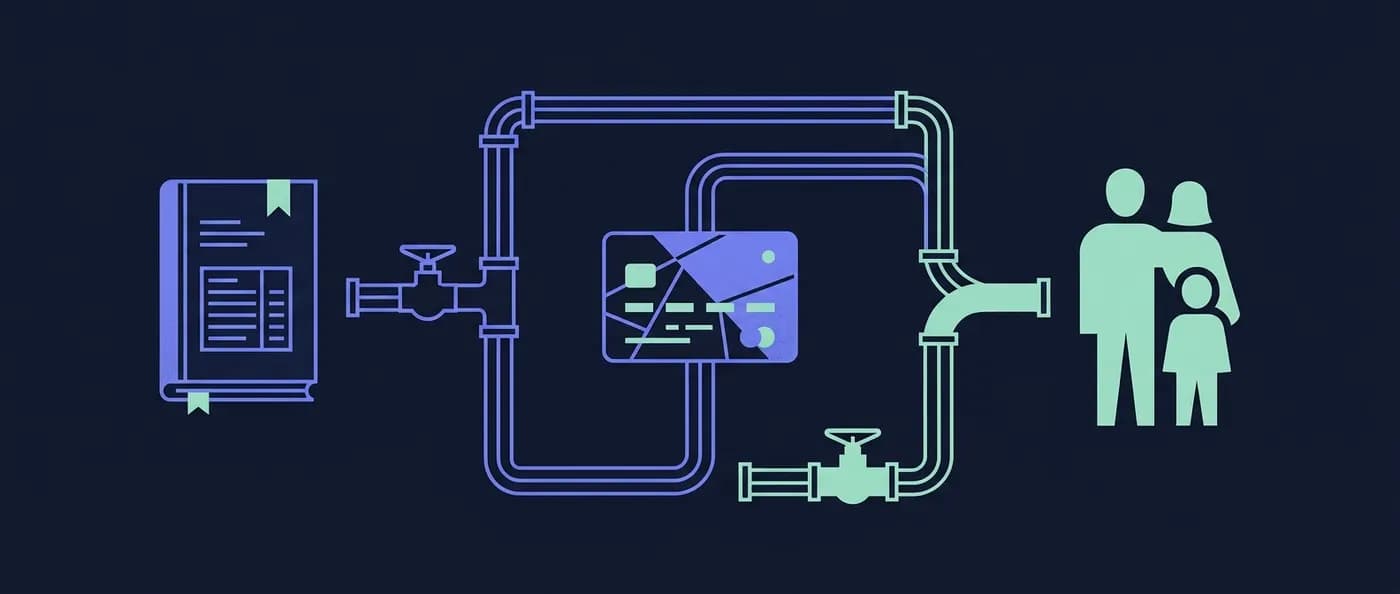
This guide is written for the person doing the worst administrative job there is: establishing what a family member owned, and getting it into the right hands. The process is more navigable than it appears, provided you take the steps in the right order.
First, establish what exists
Do this before you contact any AMC, because the search determines everything that follows.
1. Request a consolidated account statement against their PAN. A CAS lists every mutual fund folio across both registrars in one document. Request it from CAMS or KFintech, or through MF Central. If you have access to their email, it may already be arriving monthly.
2. Search MITRA. SEBI's Mutual Fund Investment Tracing and Retrieval Assistant is an industry-level searchable database of inactive and unclaimed folios — precisely the holdings a CAS may miss because nobody has transacted on them for a decade. It is reachable through the registrars, MF Central, AMFI, the AMCs and SEBI. See unclaimed mutual fund money.
3. Check the demat account separately. If they held units in demat mode, those sit with NSDL or CDSL and transmit through the depository, not the registrar. A depository holding statement is a separate request.
4. Check the physical papers. Old folio statements, cheque counterfoils, bank statements showing SIP debits or dividend credits. A recurring debit to an AMC in an old bank statement is a folio.
5. Search the other registries while you are at it. The same problem exists for shares, insurance, EPF and bank deposits, each with its own tracing route. Doing them together saves repeating the document-gathering.
Then, work out which route applies
The documents required depend almost entirely on who is claiming and what was recorded — not on the amount alone.
Route A — there is a surviving joint holder. The simplest case. The surviving holder submits a deletion-of-deceased-holder request with a death certificate; the folio continues in their name. No transmission claim, no distribution question at this stage.
Route B — there is a registered nominee. The nominee submits a transmission request. Broadly, they will need the transmission form, an original or attested death certificate, the nominee's own KYC and bank details, and a cancelled cheque. Registrars operate simplified documentation below a threshold amount and require more — typically including an indemnity and attestation — above it.
Route C — no nominee, no joint holder. The legal heirs must establish entitlement. This is where it becomes slow and expensive, and it usually requires some combination of a Will with probate, a succession certificate, a legal heir certificate, an indemnity bond, and a no-objection declaration from the other heirs. Court involvement is common.
⚠️ Thresholds, forms and attestation requirements differ between registrars and change periodically. Ask the registrar for their current transmission checklist before you assemble anything — it will save you a rejected submission.
The practical sequence
- Get 10–15 attested copies of the death certificate. Every institution wants one and several want originals sighted. Doing this once saves weeks.
- Complete the claimant's KYC first. A transmission cannot credit units to someone whose KYC is not in order. If the claimant has never invested, this is the step that will delay everything, so start it on day one. See KYC.
- Use one registrar's service centre for everything they service. CAMS and KFintech between them service almost the entire industry, so most folios resolve through two conversations rather than fifteen. See registrars.
- Submit transmission requests, not redemption requests. Transmission moves the units into the claimant's name; they can then decide what to do. A redemption forces a sale at whatever the market is doing that week, and creates a tax event immediately.
- Keep a log. Folio, AMC, registrar, date submitted, reference number, status. There will be more items than you expect and some will need chasing.
- Escalate through SCORES if you are stuck. SEBI's investor grievance platform exists for exactly this, and a complaint there moves things.
Then, the tax position
Two facts matter, and they are the ones most often got wrong:
Inheriting is not a taxable event. India currently levies no inheritance or estate tax, and receiving units by transmission does not itself create a tax liability.
But the cost basis carries over. The heir inherits the original purchase cost and the original date of acquisition. There is no step-up to the value on the date of death. So when the units are eventually sold, the capital gain is computed from what the deceased paid, and the holding period includes their years — which usually means the gain qualifies for long-term treatment immediately.
That has a useful planning consequence: there is no tax reason to sell quickly. Transmit first, decide later, and redeem in a way that uses the annual exemption across more than one financial year if the amounts are large. See mutual fund taxation.
⚠️ This is a general description, not advice on your facts. A transmission involving a Will, multiple heirs, a business or a non-resident claimant needs a professional.
What to do with the money afterwards
Once the units are in the claimant's name, the temptation is to redeem everything at once. Resist it — it is a windfall, and the same discipline applies: park it, take advice, clear expensive debt, and only then decide an allocation. The inherited portfolio's asset mix was built for someone else's horizon and is almost certainly wrong for the new owner, but that is a reason to restructure deliberately rather than to liquidate in week one.
Pitfalls to avoid
- Redeeming instead of transmitting. Forces a sale at an arbitrary moment and starts the tax clock in the wrong place.
- Starting before the claimant's KYC is done. It is the long pole; begin it first.
- Assuming the CAS is complete. Search MITRA for inactive folios and check the demat account separately.
- Ordering too few death certificates. A small thing that costs weeks.
- Assuming nomination settles entitlement. A nominee receives the units and may still be answerable to the beneficiaries under the Will.
- Letting it sit. Unclaimed amounts stop accruing to you after three years.
- Doing it alone where there is a dispute. If heirs disagree, involve a lawyer early rather than after a submission has been made.
Key takeaway
Work in this order: find, then claim, then decide. Use a CAS against their PAN plus MITRA for folios nobody remembers, and check the demat account separately. The route then depends on the record — a surviving joint holder is simplest, a registered nominee is straightforward, and no nominee means the court route, which is the single strongest argument for setting nomination on your own folios today. Transmit the units rather than redeeming them: there is no inheritance tax, the original cost and acquisition date carry over, and that means there is no tax reason to rush a sale.
More in Module 8 — The operational and legal layer
Demat or Statement of Account: which holding mode?
The units are identical; only the recordkeeping differs. One is free and keeps Direct plans simplest, the other puts everything into one transmission process.
Moving your funds from one platform to another
Your platform does not hold your units, so changing apps usually transfers nothing. What costs money is a Regular-to-Direct switch, which is a redemption.
Nominee vs joint holder: what happens in a crisis
A nominee receives, a joint holder owns, and a Will decides who keeps it — three different questions. Plus the case nobody plans for: alive but unable to act.
Unclaimed dividends and redemptions: how the money gets stuck
Stale addresses, closed bank accounts and forgotten folios. What it earns meanwhile, why three years is the number that matters, and how to search MITRA.
Folio numbers: why you have several and when to consolidate
A folio is your account with one AMC, not one scheme. How duplicates appear silently, what they cost, and why merging them is free and not a taxable event.
Cut-off timings: which day's NAV you actually get
Realisation of funds decides the NAV, not when you clicked. 3pm for most schemes, 1:30pm for liquid funds — and why optimising your SIP date is wasted effort.
How SEBI's rules actually protect a retail investor
The structural protections, the conduct rules and the safety nets — and the more useful half: an explicit list of what none of it protects you from.
CAMS and KFintech: the registrars that hold your record
Not your AMC and certainly not your app — two registrars hold the official register. Why MF Central is the single most useful login in your portfolio.
Automated rebalancing: robo-advisor or do it yourself?
In India the deciding variable is tax: rebalancing inside a fund costs nothing, rebalancing across your own funds realises gains every time.